Settlement Gravity
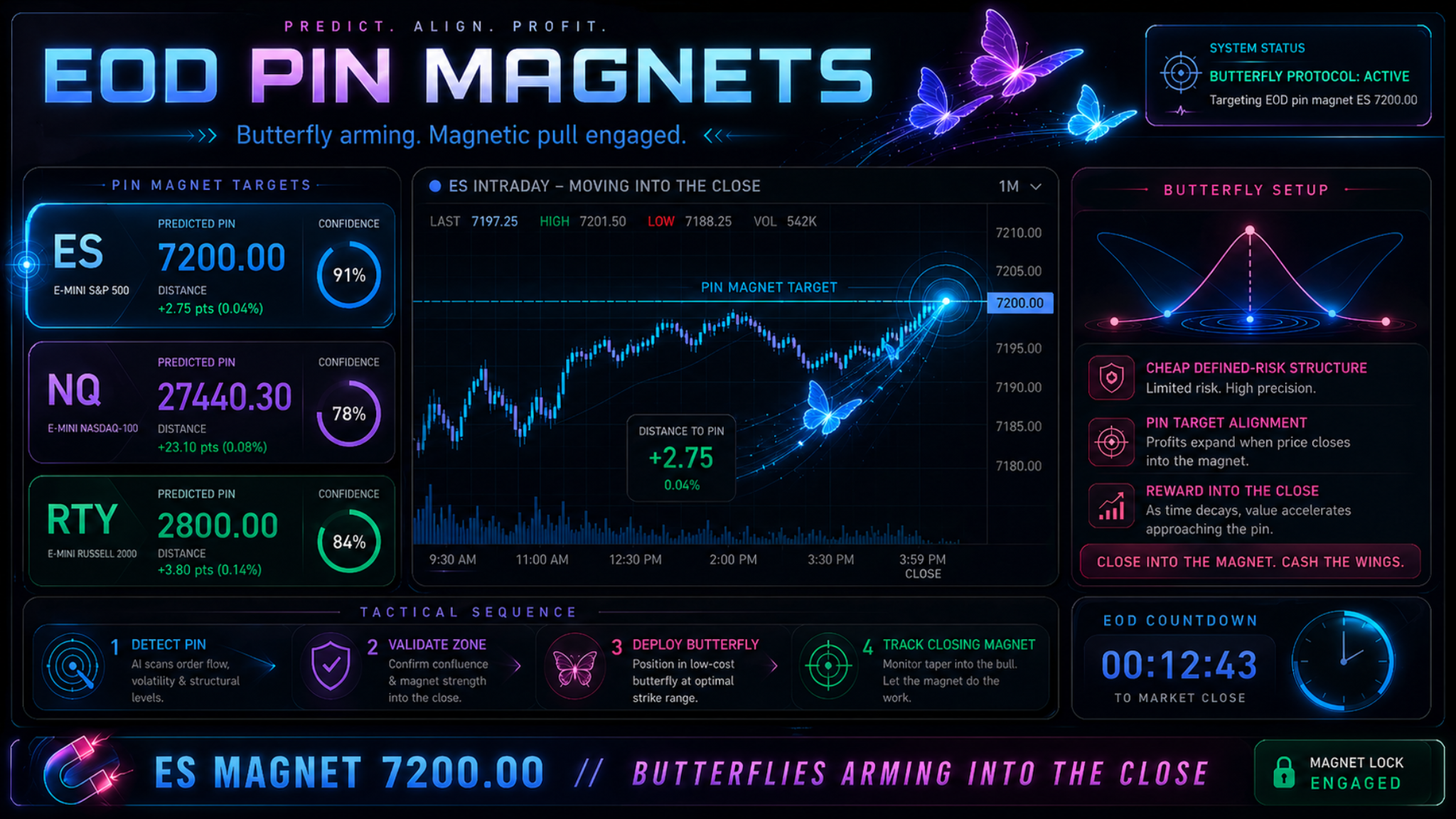
A dedicated Omega page for EOD pin magnet butterflies: find the closing magnet, separate final pin from sticky chop, and arm defined-risk structures when the mass agrees.
Stop chasing the close. Let it come to you.
The Butterflies page is the clean EOD pin workflow: identify the dominant settlement magnet, verify whether it is a true final pin or only a sticky zone, and use that read to arm defined-risk butterfly structures.
This is the trader-facing bridge between the pin magnet engine and the butterfly execution manuals. It answers the only question that matters late day: is price being pulled into a tradable pin body, or is the tape running away from the setup?
[ The edge factor: algorithmic gravity ]
Most traders guess the close at 3:30 PM. Omega calculates the mass of the gravity pulling the market: Open Interest, Live Volume, Tape Velocity, and distance from the pin body.
The goal is not to buy a fly just because a pin exists. The goal is to wait until the pin has enough structure, enough distance, and enough time-window quality to justify the defined-risk shot.
> Know the mass. Know the window. Arm the fly.